What are the advantages of water-based inks
 Watch:1212
Today we are going to talk about the advantages of water-based inks. Because water is used as a dissolving carrier, water-based inks have significant environmental protection and safety characteristics: safe, non-toxic and harmless, non-flammable and non-explosive, and almost no volatile organic gases are generated. The main manifestations are as follows: Aspects. It does not pollute the environment. VOC (Volatile Organic Gas) is recognized as one of the main sources of air pollution today. Solvent-based inks emit a large amount of low-concentration VOCs, because water-based inks use water as the dissolution carrier. Therefore, no matter it is in its production process or when it is used for printing, it hardly emits volatile organic gas (VOC) into the atmosphere, which is unmatched by solvent-based inks.
1. Solvent-based inks emit a large amount of low-concentration VOC during the production process. According to estimates, if a general solvent-based ink manufacturing plant uses incompletely enclosed production equipment, the volatilization loss of organic solvents accounts for about 0.3% to 1% of ink output. As for the treatment of low-concentration VOC, except for a few ink factories that use high-cost treatment methods such as activated carbon adsorption. Most are discharged directly into the atmosphere at high altitude. Not only that, in the printing process, the organic solvent in the solvent-based ink is almost completely dried and quickly volatilized. In addition to the high-concentration VOC above the printing press, which is treated by processes such as catalytic combustion or microbial treatment, the low-concentration VOC that permeates the air in the printing workshop is often directly discharged into the atmosphere. If the proportion of organic solvents in the solvent-based ink is Calculated from 25% to 35%, the amount of VOC directly discharged into the atmosphere is quite astonishing.
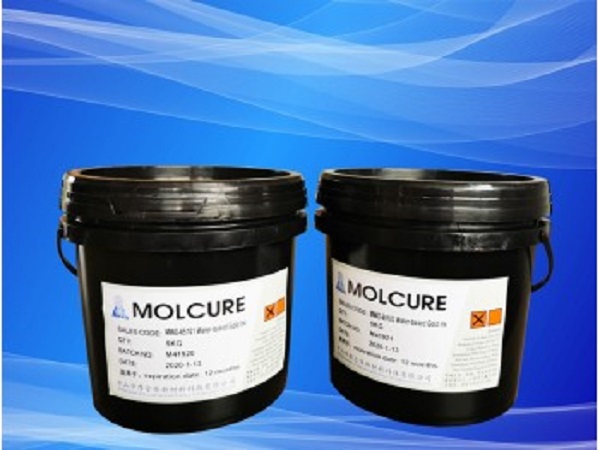
2. The water-based ink just overcomes this shortcoming. This unique feature of non-pollution to the atmospheric environment is being favored by more and more printing companies. Reduce residual poisons and ensure food hygiene and safety. Water-based ink completely solves the toxicity problem of solvent-based ink. Because it does not contain organic solvents, the toxic substances remaining on the surface of the printed matter are greatly reduced. This feature. Good health and safety are reflected in packaging and printing products that require strict hygiene conditions such as tobacco, alcohol, food, beverages, medicines, and children's toys. Nowadays, human beings pay more and more attention to food safety. Attention has been paid to the hygiene and safety of food packaging. Strict requirements are also imposed on the residual amount of hazardous substances in packaging materials and packaging printing. It is quite difficult for printed matter using solvent-based inks to meet the requirements of food hygiene and safety. And this is for prints using water-based inks. But it's easy. Reduce consumption and cost, due to the inherent characteristics of water-based inks-higher homomorphic content. Can be deposited on a thinner ink film. Therefore, compared to solvent-based inks. Its coating amount (the amount of ink consumed per unit printing area) is less. After testing. Compared with solvent-based inks. The coating amount is reduced by about 10%. In other words, print the same quantity and specifications of printed matter. The consumption of water-based inks is about 10% less than that of solvent-based inks.
3, not only that, because the printing plate needs to be cleaned frequently during printing. Therefore, solvent-based inks are used for printing. Need to use a lot of organic solvent cleaning fluid, and use water-based ink printing. The cleaning medium is mainly water. From the perspective of resource consumption. Water-based inks are more economical. It is in line with the theme of a conservation-oriented society advocated by the world today. When printing with water-based inks, it does not need to be diluted with any organic solvents, just clean water. The printing industry often says "how much solvent can be added", such as adding 30%-50% of the solvent to the ink, and mistakenly believe that the more solvent the better, the lower the cost. In fact, this is not the case. The 30%-50% of the added solvent is added during the entire printing process, which is added due to the change in ink viscosity caused by the volatilization of the solvent. The faster the printing speed, the faster the volatility of the thinner that needs to be blended, and the more times the solvent is added, which is equivalent to continuously increasing the printing cost. Therefore, it is not that 10KG ink is added to 5KG solvent to start printing. According to industry standards, the ink has high color density and low viscosity (except for silk screen, etc.) is a good ink.
This is related to the raw materials selected by the ink manufacturer, such as the molecular weight of the resin, the formula, and the production process. In addition to the enclosed printing workshop, the amount of solvent added in the printing process will change due to factors such as temperature and wind. The addition of diluent to the ink is only used to reduce the viscosity of the ink and make it suitable for printing. Adding, the color density of the ink will decrease, and the weight of the binder will decrease at the same time, so that good products cannot be printed. Therefore, only pure water is added to water-based ink, and it is added at once (pre-press). In the printing process, it will not change the color due to the change of viscosity, and it will not be like the ink, because of the waste generated when the thinner is added in the printing process, which greatly improves the qualified rate of the printed product and saves One of the cost advantages of water-based inks is to reduce the cost of solvents and reduce the appearance of waste products.
Part of the content of this article has been compiled from the network and shared. If there is any infringement, please contact the editor to delete it.